Starworks - Southampton University Spaceflight Society
Starworks
Tuesdays | 18:00 - 20:00
25/1007
Our Starworks project is developing a propulsive self-landing vehicle to be one of a few teams within Europe to compete in the Collegiate Propulsive Lander Challenge
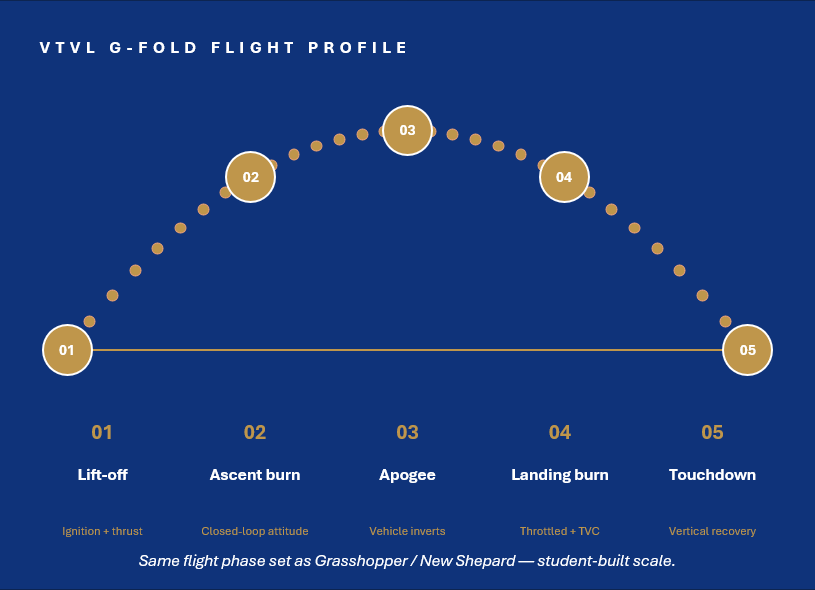
VTVL (Vertical Take-off; Vertical Landing) describes a launch system which has the capabilities to take off - as all functional rockets do - and also land - which very few do. The key advantage of a VTVL compared to an ordinary launch vehicle is that it can be reused and reflown.
As Falcon 9 has shown, this single advantage can change the face of the space industry: it reduces launch costs, increases launch frequency, improves sustainability and supports future space operations. For SUSF it allows us to develop the skills to engage with this forefront of this space industry - as well as for general lander technology, which has many similarities.
There are significant engineering challenges, or significant opportunities to our Starworks team. An example is the guidance and navigation subsystems, which must both be complex and adaptable. The engine must also be capable of being very throttleable and reusable, whilst the entire structure must withstand a range of thermal and structural loads. Overall this makes VTVL very difficult, but there benefits on modern spaceflight are significant, and for deeper space exploration: vital.
Starworks Mission
Starworks mission is to design a fully functional VTVL vehicle and test fly it! This is a very complex multi stage aim, with many engineering considerations and components. Because of this, Starworks is aiming to compete in the American Collegiate Propulsive Landing Challenge (CPLC) and follow their framework and design goals. This sets clear requirements for Starworks to achieve and stages for the project to work through whilst rewarding Starworks financially for significant progress.
Beyond this, Starworks will continue to improve its VTVL technology above the limitations of this specific competition.